Cabanis's Seedeater (Amaurospiza concolor)
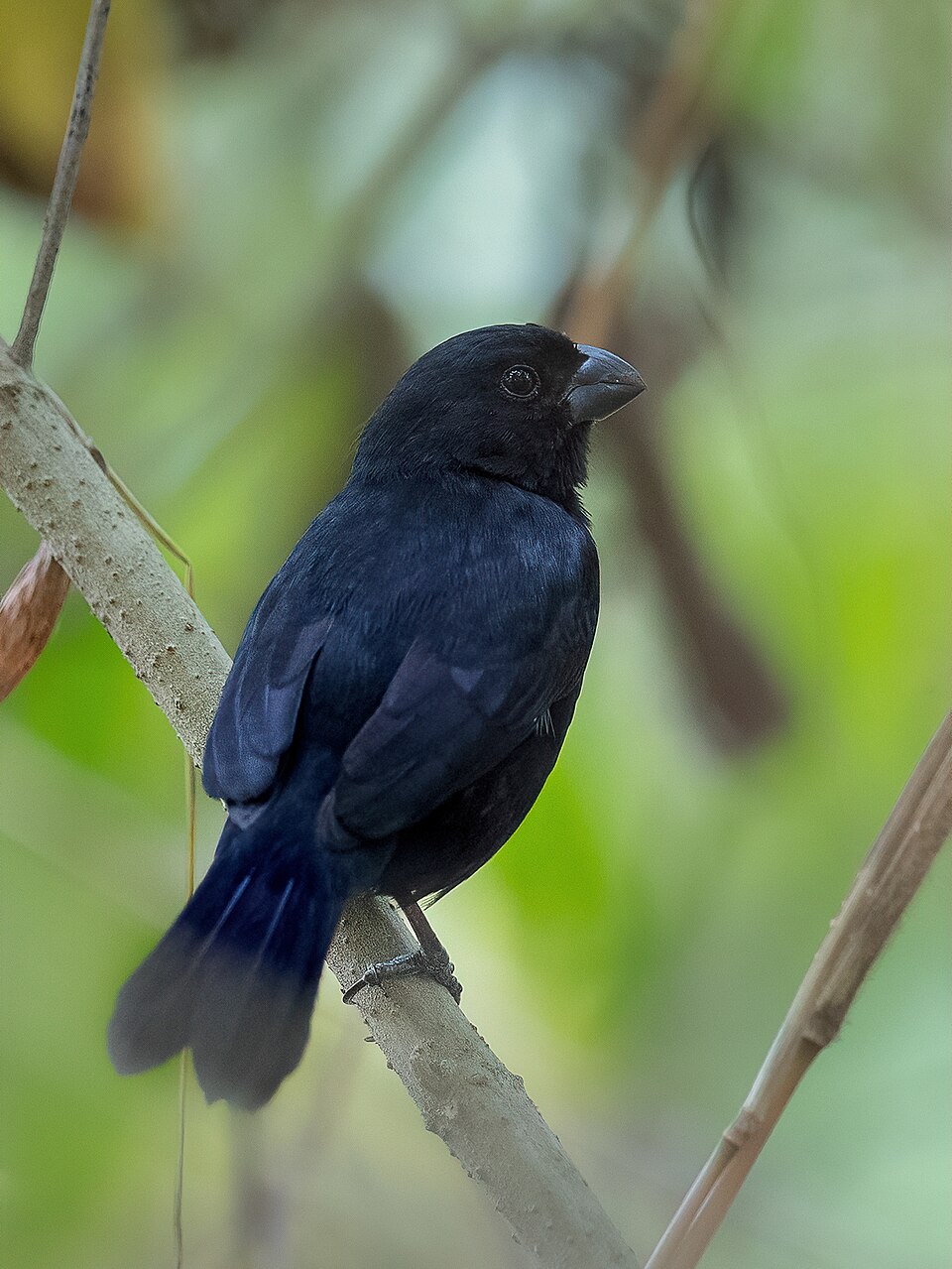
About the Cabanis's Seedeater
The blue seedeater (Amaurospiza concolor) or Cabanis's seedeater is a species of bird in the cardinal family that is found in southern Mexico and Central America. The Ecuadorian seedeater (Amaurospiza aequatorialis) was formerly considered a subspecies of the blue seedeater. The blue seedeater was formally described in 1861 by the German ornithologist Jean Cabanis based on a specimen that had been collected in Costa Rica. Cabanis placed the species in a new genus Amaurospiza and coined the binomial name Amaurospiza concolor. The specific epithet is Latin meaning "uniform", "similar in colour" or "plain".
A real field recording of the Cabanis's Seedeater. Press play and focus on the rhythm and pitch of each phrase.
Listen
Our streaming copies are mirrored from the original xeno-canto file and transcoded to 96 kbps mono — a modification, so we note it here; the licence for each recording is named in its credit below.
1 recording on this page · licensed Public Domain / CC0 ×1 · mirrored on this server, free for commercial reuse · recorded in Costa Rica, Mexico, Panama · xeno-canto lists 10 recordings for this species in total.
Similar species
- Blackish-blue SeedeaterAmaurospiza moestaprofile
- Carrizal SeedeaterAmaurospiza carrizalensisprofile
- Ecuadorian SeedeaterAmaurospiza aequatorialisrecording
Species grouped by shared genus, family and range.