Papuan Eagle (Harpyopsis novaeguineae)
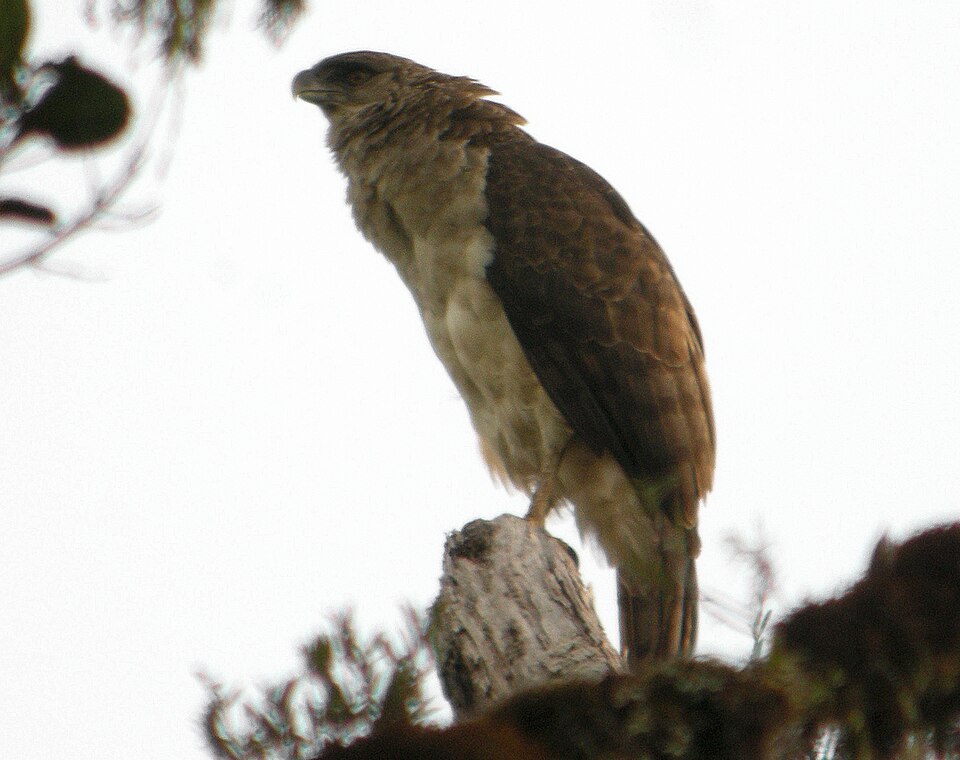
About the Papuan Eagle
The Papuan eagle (Harpyopsis novaeguineae) is a large bird of prey. It is also known by several other names, including Papuan harpy eagle, New Guinea eagle, New Guinea harpy eagle, or kapul eagle, the latter name from the local name for a usually arboreal marsupial that the eagle is known to regularly hunt. This is an endemic species to New Guinea, and it can occasionally be found throughout the island. This is a forest-dwelling species, usually occurring in mature rainforest. The Papuan eagle is a fairly little-known species for a large eagle; however, it is known to prey on a wide range of prey, probably by and large mammals and birds from small to quite large sizes. Unique amongst eagles, the Papuan eagle is a surprisingly fast and agile terrestrial avian predator and is capable of chasing down prey on the forest floor. What little study has been conducted about its breeding habits suggests it nests in a large forest tree, perhaps every other year. The Papuan eagle is probably naturally scarce, but it is under the threat of habitat destruction by deforestation, as well as hunting. Due to its small and declining population, the species has been classified as vulnerable by the IUCN.
No audio on this page yet
We only publish recordings we may use commercially, because this site is supported by ads. xeno-canto lists 16 recordings for this species: 5 CC BY-NC-ND · 4 CC BY-NC-SA. None of them permits commercial use, so there is no player here — the page is kept as a profile so the bird is not missing from the guide.
As soon as someone uploads a freely licensed recording, we mirror it and the player appears here.
Listed as recorded in Indonesia, Papua New Guinea in the xeno-canto catalogue.
Other birds you can hear here
- Australasian FigbirdSphecotheres vieillotirecording
- Blue-winged KookaburraDacelo leachiirecording
- Channel-billed CuckooScythrops novaehollandiaerecording
- Common KingfisherAlcedo atthisrecording
- Fan-tailed CuckooCacomantis flabelliformisrecording
- Grey ShrikethrushColluricincla harmonicarecording
These are the birds recorded alongside it, not close relatives — the site holds no other member of its genus or family yet.