Streak-throated Swallow (Petrochelidon fluvicola)
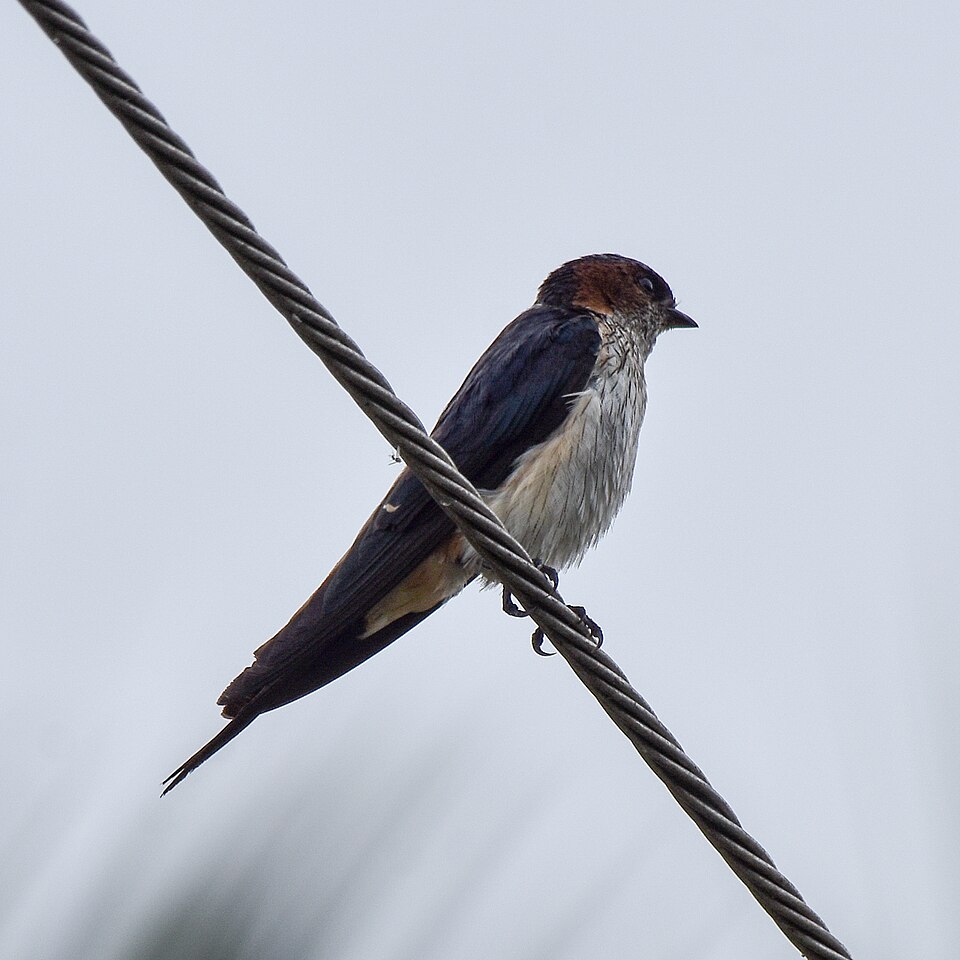
About the Streak-throated Swallow
The streak-throated swallow or the Indian cliff swallow (Petrochelidon fluvicola) is a passerine bird, which includes a large number of other species including many swallows. It is native of South Asia where it is a breeder, year-round resident or winter visitor in the countries of Afghanistan, India, Nepal and Pakistan. It occurs as a vagrant in the Maldives, Sri Lanka, and the Middle East. The streak-throated swallow was first identified by the English zoologist Edward Blyth in 1855. It is currently placed in the genus Petrochelidon, identified by the German ornithologist Jean Cabanis in 1850. A synonym is Hirundo fluvicola. It belongs to the family Hirundinidae, named by the French polymath Constantine Samuel Rafinesque in 1815.
No audio on this page yet
We only publish recordings we may use commercially, because this site is supported by ads. xeno-canto lists 35 recordings for this species: 21 CC BY-NC-ND · 14 CC BY-NC-SA. None of them permits commercial use, so there is no player here — the page is kept as a profile so the bird is not missing from the guide.
As soon as someone uploads a freely licensed recording, we mirror it and the player appears here.
Listed as recorded in India in the xeno-canto catalogue.
Related species you can hear
- American Cliff SwallowPetrochelidon pyrrhonotarecording
This species has no recording here yet — these relatives do, so you can hear what the family sounds like.