Black-crested Bulbul (Rubigula flaviventris)
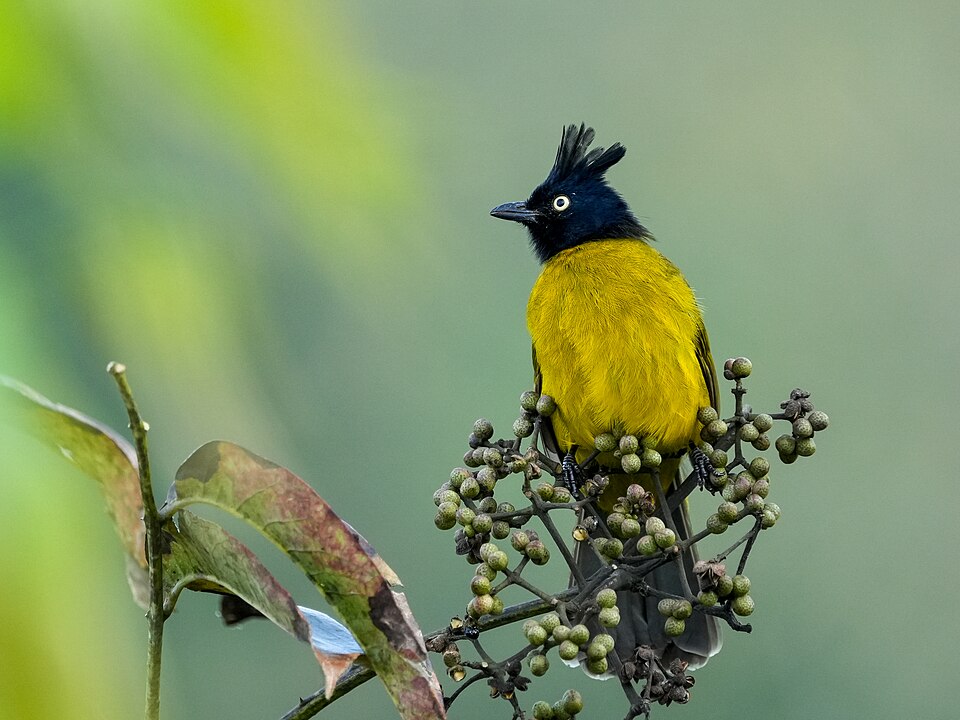
About the Black-crested Bulbul
The black-crested bulbul (Rubigula flaviventris) is a member of the bulbul family of passerine birds. It is found from the Indian subcontinent to southeast Asia. The black-crested bulbul was originally described in the genus Vanga and later moved to the genus Pycnonotus. Pycnonotus was found to be polyphyletic in recent molecular phylogenetic studies and five bulbuls, including the black-crested bulbul, were moved to Rubigula. Until 2008, the black-crested bulbul was considered as conspecific with the black-capped, ruby-throated, flame-throated and Bornean bulbuls, but these are all now treated as distinct. Eight subspecies are accepted: R. f. flaviventris – (Tickell, 1833): Found from Nepal, northern and eastern India (including Pachmarhi in central India) to southern China and central Myanmar
No audio on this page yet
We only publish recordings we may use commercially, because this site is supported by ads. xeno-canto lists 181 recordings for this species: 13 CC BY-NC-ND · 3 CC BY-NC-SA. None of them permits commercial use, so there is no player here — the page is kept as a profile so the bird is not missing from the guide.
As soon as someone uploads a freely licensed recording, we mirror it and the player appears here.
Listed as recorded in Cambodia, China, India, Malaysia in the xeno-canto catalogue.
Related species you can hear
- Flame-throated BulbulRubigula gularisrecording
This species has no recording here yet — these relatives do, so you can hear what the family sounds like.